




Highlighting Australia
- As a proudly Australian initiative, we’re excited to showcase a collection of Australian stories, music, tributes and more.
Join activities, celebrations, study groups, spiritual empowerment and education programs for young people, and more.
Baha’i beliefs address essential spiritual themes for humanity’s collective and individual advancement. Learn more about these and more.


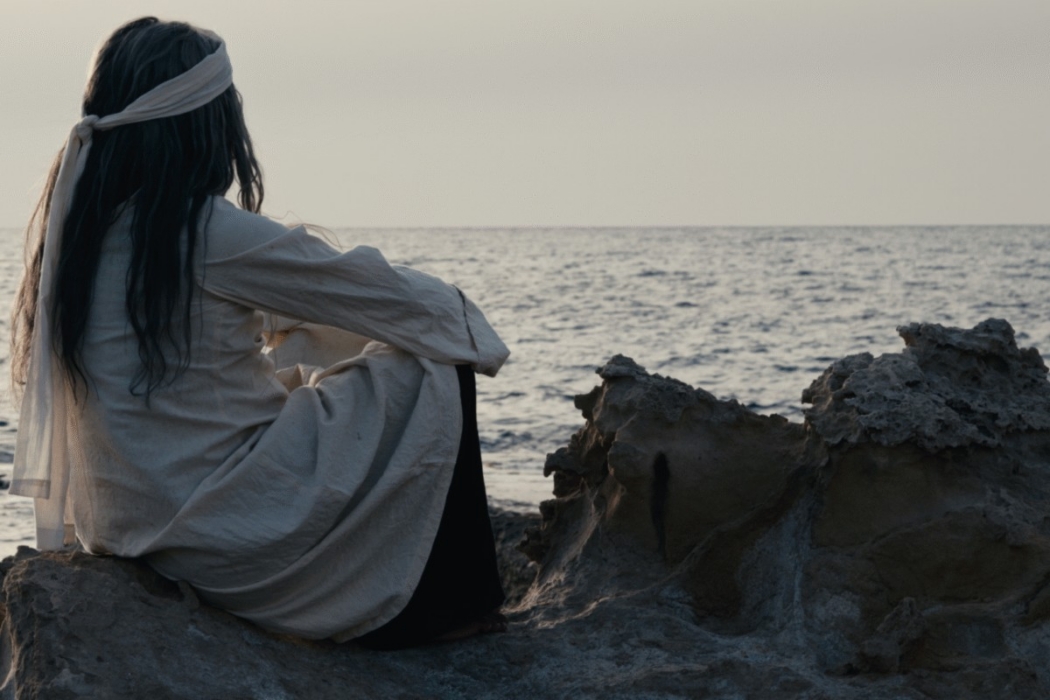
I have long deeply admired the work of Mary Darling and Clark Donnelly and so I was thrilled to be able to chat with them about Cast Aside the Clouds, a feature film that shares a groundbreaking love story of a young Baha’i in Iran who falls in love with a Muslim doctor.
Cast Aside the Clouds has garnered praise and success on the international festival circuit, earning official selections at over 19 festivals across the USA, Canada, the UK, Turkey, Greece, India, the Netherlands, Germany, Spain, and Australia, and taking home major awards including Best Director, Best International Feature, Best Drama, and Best Actress. The film has resonated with both audiences and critics for its compelling storytelling, strong directorial vision, and powerful lead performances.
The film features a cast of acclaimed Iranian actors, including many Baha’is, from across the globe. The cast includes Parmiss Sehat, Behtash Fazlali, Shirin Youssefian, Anthony Azizi, Vassilis Koukalani, Dana Haqjoo, Cybele Hay, Panta Mosleh, Djavad Djavahery, Negin Kamali, Alexis Rad, and Tara Tedjarati. It was produced by Clark Donnelly, Steve Solomos, and Mary Darling, along with producers Payam Zamani, Shahin Sobhani, Panos Kouanis, and Angelos Kotaridis and co-producers, Rob Cotterhill and Pavlo Athanasoulas.
Although edited for brevity, here’s our conversation:
Could you please tell us a little about the feature film, Cast Aside the Clouds?
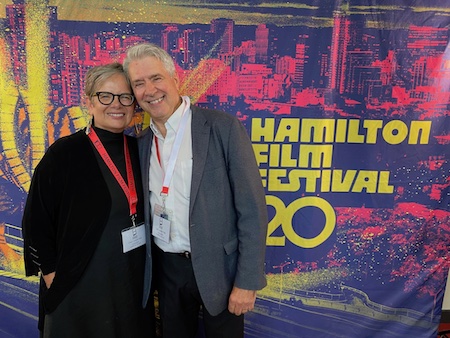
Mary: It’s been a fascinating project, especially considering how it began. In 2019, a friend gave us a book called Khaterat Utab by Rouhieh Fanaian, a novel that circulated within the Persian community for years. A woman in Tehran wrote it. While the story is very different from ours, our friend felt it might have cinematic potential. When we read it, we realized it wasn’t directly adaptable for film, but it sparked something important. At its core was the story of a Baha’i woman falling in love with a Muslim man in Iran, and that premise stayed with us. After finishing it, I passed the book to Clark and said, “I think there’s something here–see if it resonates with you too.” From there, we just started writing, outlining, exploring ideas, and thinking about what elements felt essential in telling a story set in Tehran.
You often write together. Is that right?
Mary: We do, and it’s a process that really works for us. He might start something, then I’ll step in to story edit and send it back. It goes back and forth like that, or I’ll have a notion about something like this, throw it at him, say, “I think it could be something”, it’ll come back. And it really evolves and takes shape. And as we were writing this particular piece, we really started to realize that we needed to pull in industry people to read it as well, because it’s a Baha’i story, but we didn’t want it to be a story only for Baha’is. We wanted it to be a story for everyone.
How does the story play a part in raising awareness about the persecution of the Baha’is in Iran?
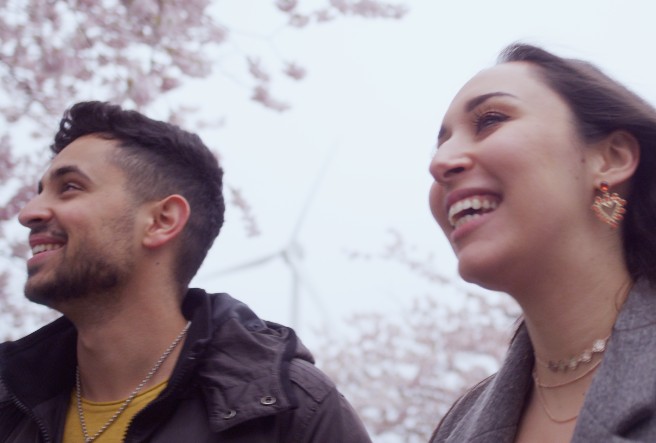
Mary: This is the story of Layla Khosravi, a young Baha’i woman who lives under constant surveillance and systemic erasure in Iran. Though her faith is persecuted in Iran, it is her source of strength. When she meets Dr. Sasan Naderi, a secular neurologist shaped by state ideology, their unexpected connection sparks a quiet reckoning. Their love grows in secret, strained by scrutiny and silence. Finally, when Layla is imprisoned for her beliefs, Sasan is forced to confront the injustice around him. Her courage reshapes his worldview and compels him to stand beside her. That’s all I will say because the rest is a spoiler.
We wanted to write a story based on real facts from events happening in Iran right now, told as a love story that makes it very approachable and hearable, but also really devastating.
Clark: It’s called Cast Aside the Clouds, as in “cast aside the clouds of ignorance”. I think another major theme is the independent search for truth. And one of the things that attracted us to that story so much was that it was told in such a natural way. Here’s this young Baha’i woman who falls in love with her Muslim doctor. Now, he doesn’t know any of this stuff, and so he’s got to conduct his own independent search for truth in order to figure out what is going on, especially when she’s arrested. Which really triggers something. Like, why would this be? And why, in this case, is his uncle so adamantly opposed to the Baha’is?
You are so prolific and you have made so many fantastic projects. How did those projects contribute to this?
Mary: I think everything we do is connected—each project builds on the last. With Exemplar, for instance, one theme of many explored in this film, through the life of Abdu’l-Baha, was the idea of sacrifice and serving others for something greater than oneself. That same thread carries into this story. When you look at Abdu’l-Baha’s life, it’s entirely about that kind of sacrifice—for His Father and His teachings. Bringing that idea into a more intimate character like Layla, someone ordinary facing something profound, you can see that same spark of faith in her.
Clark: Everything that you’ve done, I think, is built forward to this, and then this will go forward, hopefully, to something else.
Why do you think the film is important today?
Mary: The stories we choose to tell matter. I think this film matters today because it presents youth as active agents of change, showing a questioning of inherited beliefs, seeking truth, and challenging prejudice. Through its portrayal of the Baha’i community in Iran, it reveals the human cost of religious persecution while highlighting resilience, moral courage, and unity. Ultimately, it calls on audiences to reject bias, think critically, and recognize the power of young people, like Layla and Sasan, to build a more just and compassionate world.
I understand you wanted to explore new processes within the on-set culture.
Mary: Everybody involved in the film was deeply invested. Bre Vader joined me as a co-director and brought incredible empathy, along with a very sharp instinct for authenticity. I had worked with Bre on Exemplar earlier, knew her talents, and wanted her on the team. While shooting, she’d watch a scene and say, “People don’t talk like that,” and we’d adjust on the spot, rewriting lines. I’d then work with the actors to explore how they understood the scene, and, by consulting together, the scene could transform in real time.
And then I also decided to invite Felicia Sobhani as another co-director. She’s actually trained as a first AD (Assistant Director)–the person on set who does detailed planning for a shoot to get everything you want each day. And she had the skill of knowing how long a scene would take to shoot, which was so helpful before arriving on set. I wanted Felicia on the team because young people in this industry so often get stuck in a role simply because they aren’t given a chance to move up, and I think she has a lot of potential to tell stories in the future.
This female-led team brought a natural ability and trust to figure things out through consultation. And, frankly, even during some of the more difficult scenes, we’d pray.
Consultation on a film set is not something I think happens often. I wanted to explore that level of collaboration more deeply. Filmmaking often puts all the creative weight on a single director, but I don’t think that’s realistic—or even helpful. No one person can see everything. When you’re deep in it, things can feel right simply because they’re working on the surface. Having others there to ask, “What if…?” or “Could this be different?” makes the work stronger.
It sounds like the atmosphere was very intentional.
Mary: It was. We also shared stories every day on set about what the film was about and why we were doing it. Some of the actors had lost family members, you know, back during the Revolution. We had an opportunity to discuss people’s personal experiences with the material. I think people connected with the material very personally. The spirit on set was extraordinary—not just among the Baha’is who were there, but across the entire Greek crew. When we were filming the prison scenes, I would begin the day by grounding us all, talking about where we were in the story, why it mattered, and the real experiences behind it. It was important to create the right space for the actors, especially those carrying such intense roles.
When we were filming the prison scenes, there was no small talk, no distractions—the space became very sacred, which is quite rare on a film set. At the end of those days, we made sure to create room for release—sharing food, talking, and just being together, because the work was so intense.
I think people understood not only the story we were telling, but also that we were trying to model a different way of working—more consultation, more inclusive production meetings, and really centering women in those conversations. It felt deeply supported, almost like a kind of confirmation that we were on the right path.
You shot the film in Greece, right? Was it difficult to make the film feel authentically Iranian?
Mary: Actually, this was a real focus for all of us. And we were very blessed in that department. We worked with an entirely Persian cast, and leaned into that 100%. We brought on Houman Eshraghi as production designer and Behnood Dadfar as cinematographer. They were instrumental in bringing Persian culture to the forefront. Together, they helped shape the look and feel of the film, drawing on their upbringing in Iran and translating the textures and visual storytelling into a genuine, lived perspective. The cast also brought forward many suggestions to make it authentic.
It sounds like you also collaborated with like-minded financiers.
Mary: Yes, we privately financed the film with a group of people who truly believed this story needed to be told. There are too many to thank individually, and some prefer to remain anonymous, but their support made this possible. They weren’t just investing financially—they trusted us to carry something meaningful forward. From the start, we hoped to create a film that connects with audiences while gently shedding light on the reality faced by the Baha’is in Iran.
Thank you so very much, Mary and Clark, for taking the time to tell us about Cast Aside the Clouds and congratulations on your laurels and awards!
To follow announcements about upcoming screenings of the film, please visit castasidetheclouds.com. You can also find the project on Facebook and Instagram.


"*" indicates required fields
Join activities, celebrations, study groups, spiritual empowerment and education programs for young people, and more.
Horizons is an online magazine of news, stories and reflections from around individuals, communities
and Baha’i institutions around Australia
Baha’i beliefs address essential spiritual themes for humanity’s collective and individual advancement. Learn more about these and more.

We recognise their continuing connection to land, waters and community. We pay our respects to Aboriginal and Torres Strait Islander people and their cultures; and to elders both past and present.
The views expressed in our content reflect individual perspectives and do not represent authoritative views of the Baha’i Faith.


Visit the site of the
Australian Baha’i Community
and the Baha’i Faith Worldwide





I’d love to see this movie. I live in NorCal. It’s so diverse here. We have small theatres in Sacramento the Capitol of California. Please have a showing out here. Lmk. I will help grassroots through social media to bring the film here.
Cyan Stone (May 5, 2026 at 11:03 AM)
This film reminds us of our shared humanity and higher purpose. It is a powerful wake-up call wrapped in beautiful art. More of this, please—the world needs this light right now.
parviz farnoush (June 6, 2026 at 12:47 AM)