

Highlighting Australia
- As a proudly Australian initiative, we’re excited to showcase a collection of Australian stories, music, tributes and more.

Join activities, celebrations, study groups, spiritual empowerment and education programs for young people, and more.
Baha’i beliefs address essential spiritual themes for humanity’s collective and individual advancement. Learn more about these and more.

I am interested in the historical awareness of the Baha’i community–how we chart time, and how we reflect on where we stand in the unfoldment of time.
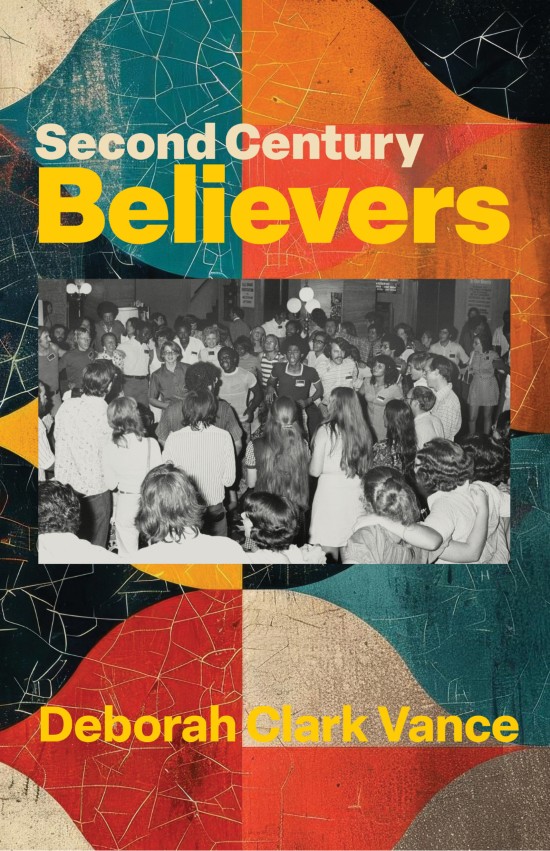
I was curious to hear about a book by Deborah Clark Vance, who was interested in a unique decade in the annals of the Baha’i Faith: 1964 and 1973. This period saw a large number of young people embracing the teachings of Baha’u’llah, including Deborah herself. She wondered about the motivations, thought processes and stories of that generation so she set about to collect their stories, their experiences and their points of view. Together, these voices form the core of her book, Second Century Believers.
Can you please tell us a little bit about yourself?

I grew up Christian and entered the Baha’i Faith in 1970 after my first year of college. In January 1971, I filled a U.S. pioneer goal to Mantova, Italy. In October that year I was able to go on pilgrimage and bought a 6th class ticket to Haifa–a reclining seat in the lowest deck. In Haifa, some wise pilgrims encouraged me to finish my education, and I eventually earned a doctorate from Howard University and taught communication and media courses at a small college. I’ve served on Local Spiritual Assemblies in three different cities, totalling 32 years.
Can you please tell us a little bit about Second Century Believers?
When I was a new Baha’i in the 1970s, young people were attracted to the Faith in droves. We often got together just to pray in a circle, or to sing. Baha’i clubs were active on college campuses. When Baha’is reached the age of 21, they’d sometimes move across their town’s borders in order to help establish new Local Assemblies. This generation is still vibrant and deep, and I wanted to chronicle some of their experiences. Having gained proficiency with qualitative research procedures, I figured it’d be a good approach: qualitative research involves in-depth interviews into the feelings and experiences among a group of people who share commonalities. The researcher sorts through the data, looking for shared meanings and reducing it to the most prominent collective thoughts. My research questions were: what attracted you to the Baha’i Faith? Why did you join it? Why have you remained active?
What inspired you to create this book?
I was thinking about what happened during the second century of Christianity (c. 100–150 AD) which is when church hierarchy and a distinct clergy became established. We’re now in the Baha’i second century and I wondered how much had changed in the Faith since the passing of the first generation of Baha’is.
The newly elected Universal House of Justice created the first Nine Year Plan–1964-73–which is when the first Baha’is born in the second century came of age. These second-century Baha’is were born since 1944, and were in their teens and early twenties during the 1960s-70s. As American children we had practiced how to survive an atomic bomb (by crouching under our school desks); teenage boys were drafted to fight a war in Vietnam; southern US states fought against racial integration; the young population–so-called “baby boomers” thanks to advertising marketers–questioned mainstream values, while political assassinations, cold war fears, and fights for equality shattered the World War Two generation’s status quo. That decade has been identified as being among the top three in history for religious reformation: when a cultural revolution, and a counter-culture emerged in many parts of the world including the U.S., Europe and Australia. So, just as there are books about believers in the historic age, I wanted to find out how Baha’is of that generation had been attracted to the Faith, joined it and have remained active.
Who is its audience? How is your book relevant and of interest to Baha’is in Australia?
To a great extent, I think that since we’re all under the umbrella of the Universal House of Justice, Baha’i experience is relevant and should be of interest to Baha’i communities throughout the world. The audience for Second Century Believers is for those who are interested in a living history of Baha’is in the formative age as well as insight into their thinking. I include quotes from dozens of second-century Baha’is who met and befriended older Baha’is who, as children, had met Abdu’l Baha during His eight-month visit in the US, speaking in churches, modelling His example as He served the poor and needy, and laying the cornerstone for the Mother Temple.
What’s something you’ve learned in the process of making this book?
It surprised me that I wrote something historical, because until I learned about progressive revelation, I couldn’t comprehend the history I learned in school which was focused on political battles and made no sense to me. But I realized I needed some historical background for a discussion about second century believers. I loved hearing about the friendships this generation, as teens, made with the older Baha’is. I think older Baha’is in the US are often ignored, whereas their comments quoted in this book reveal a depth that younger Baha’is could learn from. Although we didn’t have Ruhi books, we did study and deepen on the Writings themselves. When I joined the Faith at the age of 19, I was advised to memorize the “Tablet of Carmel” and “These Perspicuous Verses” and as many prayers as possible.
Also, the book was published by George Ronald in England. Because many of my historical reference points are American, their reviewers wanted clarification about some events and issues. For example, some respondents mentioned their experiences involving Persians coming to their communities: 116,172 Persian Baha’is fled to the US when Khomeini took power in Iran, and were directed to settle in metro areas. The reviewers needed more context. This alerted me that our knowledge of each other’s communities throughout the world has some limits.
What do you hope readers will take away with them?
I’m inspired by the thoughtfulness and candour of the respondents’ thoughts, and heartened by their emphasis on Spirit from the time they entered the Faith until now. I hope readers will feel this way too.
What is some advice you’d give to anyone pursuing Baha’i-inspired creative work?
Find inspiration in the Writings, connect the teachings with your personal experiences, explore where your insights lead and build from there. Expect that this will take some meditation and time to do the research as well as to craft the sentences.
Thank you, Deborah, for taking the time to share this with us!
You can purchase Second Century Believers from a variety of book retailers inluding Bahaibooks.com.au in Australia!


"*" indicates required fields

Join activities, celebrations, study groups, spiritual empowerment and education programs for young people, and more.

Horizons is an online magazine of news, stories and reflections from around individuals, communities
and Baha’i institutions around Australia

Baha’i beliefs address essential spiritual themes for humanity’s collective and individual advancement. Learn more about these and more.

We recognise their continuing connection to land, waters and community. We pay our respects to Aboriginal and Torres Strait Islander people and their cultures; and to elders both past and present.
The views expressed in our content reflect individual perspectives and do not represent authoritative views of the Baha’i Faith.


Visit the site of the
Australian Baha’i Community
and the Baha’i Faith Worldwide