

Highlighting Australia
- As a proudly Australian initiative, we’re excited to showcase a collection of Australian stories, music, tributes and more.

Join activities, celebrations, study groups, spiritual empowerment and education programs for young people, and more.
Baha’i beliefs address essential spiritual themes for humanity’s collective and individual advancement. Learn more about these and more.

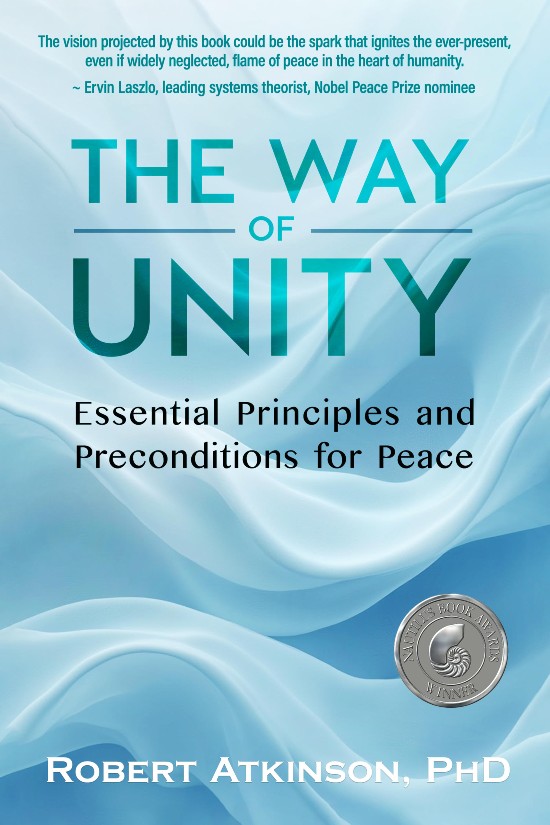
Robert Atkinson’s latest Book, The Way of Unity: Essential Principles and Preconditions for Peace, is an anthem to hope. Both practical and philosophical, it offers a new way of seeing the trajectory humanity is embarked on and the glorious future that awaits us.
The Way of Unity was recently honoured as a prestigious 2026 Silver Nautilus Book Award winner in the Religion/Spirituality of Other Traditions category, adding to their long list of “Better Books for a Better World.”
Robert shared with us about his book and what he hopes readers, of all kinds, will take away with them!
Can you please tell me a little bit about the book?
Sure, this is a book that addresses the needs of our time in a way that should feel comfortable to everyone. What the world needs now is a vision that would heal the divisions among us. The Way of Unity, drawing mainly upon the Baha’i teachings and those of other spiritual traditions, offers a vision of the future in which the long-promised vision of peace on earth is realized. It looks at how a universal spirituality, social action, and community building are converging to form a framework for an emergent process of renewal on all social levels.
The book offers three key takeaways that constitute an all-embracing vision:
1 – The natural order of the universe is wholeness and unity. The book opens illustrating how the entire Creation represents the most exact and meticulous expression of unity there is.
2 – There are world-embracing principles to live by that sustain wholeness and unity. The middle section presents principles that bring about unity and how they can heal the ills of a divided humanity, such as Unitive Justice, Unitive Economics, Unitive Relationships, and Unitive Language.
3 – Thousands of communities worldwide are already taking action to apply those principles to restore the world to wholeness. Finally, the book looks at a global model of social action founded upon world-embracing principles applied locally that are globally scalable.
The Way of Unity offers a vision for inner peace, interpersonal peace, and world peace. These are all so interconnected that one cannot be separated from another. The result is a visionary worldview that provides hope, optimism, and encouragement for a divided humanity.
What inspired you to write The Way of Unity? Who is its perfect audience?

Two things, really, led me to write this book. After having written a few books on storytelling, transformation, and the evolution of consciousness, I began to realize how important the thread of peace is in my own life. Born on the day the first atomic bomb was dropped on Hiroshima, I gradually came to understand that my life had been a subtle quest to find an elusive peace, both inner and outer. After founding One Planet Peace Forum, which connected me to a lot of peace building work, I saw that what is needed as a basis for that work is a wholistic, world-embracing vision that ties together local and global processes to envision it all as a deep systemic renewal of relationships and infrastructure on all levels.
The second thing that inspired me to write this book was wanting to offer a perspective that might help people recognize the Baha’i teachings as such an all-embracing vision that identifies the principles necessary for bringing about world unity, which are also prerequisites for world peace. This is a vision whose time has come.
It also seemed that an evolutionary view of humanity’s spiritual heritage would help people recognize this vision better. As explained in the book, religious scholars Andrew Harvey and Stephen Prothero have shown how each sacred tradition has contributed a unique quality, or way of approaching the sacred in an unfolding process. To this flow of evolution is now added the Baha’i Revelation, characterized as the way of unity, whose core message, or central teaching–coming at a time of dire social conditions heralding a nascent world community in the mid-19th century–represents a vision that is world-embracing.
It is in this context that the book presents the Baha’i world community not only as the embodiment of the world’s newest religion but also, through an inclusive community building process leading to global renewal, as the means for “the attainment of universal peace.”
The perfect audience for this book are all those who are concerned about the fate of our world, who hold the promise of America, and all other nations, in their hearts, who are disillusioned by polarization and conflict, who want to be inspired by hope, who want to reflect on how we can move forward together, who want to engage in thoughtful conversation with others, who want to contribute to grassroots community-building efforts, who desire to see the flourishing of humanity, who seek the regeneration of the planet, and all who strive for justice and human solidarity in the pursuit of common and shared goals.
What were some of the challenges you faced in writing the book, and what were some of the unanticipated blessings in writing it?
This may be the most complex book I’ve written, in terms of the amount of material out there on such a broad topic to draw from and to distill down to its essence. So, it was very challenging to find the best way to express all the ideas and create the right structure and organization to put it all into.
But I learned so much in researching and putting together the content and in determining the best sequence for all the information. The process of writing this book convinced me even more–if we utilize our collective will to carry out the principles and strategies we have at hand–that unity and peace are not only possible but within reach.
What do you hope readers will walk away with them after reading the book?
I think readers who are familiar with the Baha’i teachings will understand how central the principle of the oneness of humanity is to achieving world unity and world peace, but we may not be as aware of all its implications. That principle is part of a larger vision of the wholeness and unity of the entire creation.
One of the implications of the principle of the oneness of humanity that I hope readers will get is that when the human family does become one, we will reflect the natural world around us. In the book, I use the metaphor of humanity as a mycelial network, as in the underground network of roots, and other diverse life forms, that nurture and connect all the trees in the forest.
We’ve lived with the old story of separation far too long, separate families, separate communities, separate nations, separate religions, etc. A new story is emerging of humanity as organically connected and interdependent, even much more so than we are aware.
In nature, a mycelial network is designed to facilitate and maintain an organic renewal process by focusing on the needs of the whole. It doesn’t get distracted by what is breaking down; it knows that is part of the process too. It rather focuses on building up what is emerging. The greatest strength of an organic renewal process is its own unity-in-diversity.
Similarly, humanity, as part of the same natural system, was created to carry out an organic renewal process of society at all levels, local to global. This understanding, that humanity is its own mycelial network, will give us a much better chance of achieving our potential of weaving our own wholeness and unity on greater and greater levels by renewing the infrastructure of social relationships upon a new foundation of care and cooperation that safeguards the common good and contributes to the betterment of the world.
Is there anything else you’d like to share?
I’d like everyone to know that there is also a study guide in the book designed for groups, communities, and book clubs to utilize in discovering how to apply the principles in their own everyday settings. The study guide highlights the key points of each chapter and offers a set of reflective questions for each chapter. With this resource, groups and book clubs can learn together how to consult, take action, and reflect on that action to build strong, vibrant communities that become prototypes for the renewal and regeneration of all levels of relationships across society.
Thank you so much, Robert, for telling us about The Way of Unity!
You can purchase The Way of Unity from a variety of book retailers including directly from Robert Atkinson’s website and Bahaibookstore.com in the United States.


"*" indicates required fields

Join activities, celebrations, study groups, spiritual empowerment and education programs for young people, and more.

Horizons is an online magazine of news, stories and reflections from around individuals, communities
and Baha’i institutions around Australia
Baha’i beliefs address essential spiritual themes for humanity’s collective and individual advancement. Learn more about these and more.

We recognise their continuing connection to land, waters and community. We pay our respects to Aboriginal and Torres Strait Islander people and their cultures; and to elders both past and present.
The views expressed in our content reflect individual perspectives and do not represent authoritative views of the Baha’i Faith.


Visit the site of the
Australian Baha’i Community
and the Baha’i Faith Worldwide