

Highlighting Australia
- As a proudly Australian initiative, we’re excited to showcase a collection of Australian stories, music, tributes and more.

Join activities, celebrations, study groups, spiritual empowerment and education programs for young people, and more.
Baha’i beliefs address essential spiritual themes for humanity’s collective and individual advancement. Learn more about these and more.

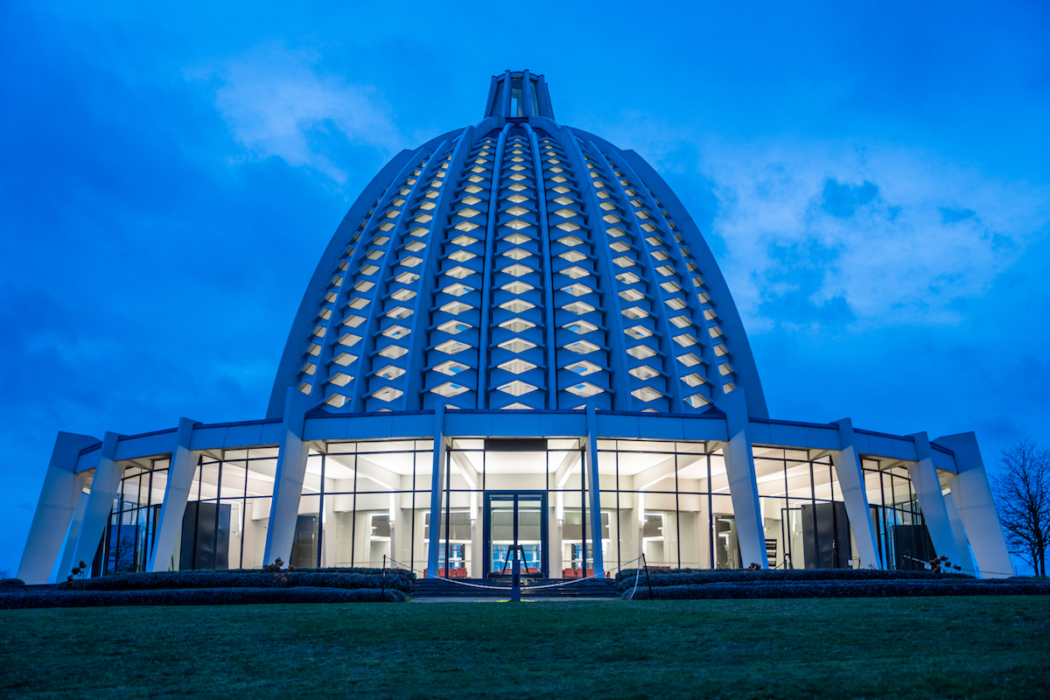
From 13 to 17 May, I had the opportunity to participate in the third European Baha’i Choral Festival at the Baha’i House of Worship for Europe in Hofheim-Langenhain.
In the days leading up to the event, we gathered nearby in Wiesbaden to prepare, and we began rehearsing the pieces that we had previously practised at home. Participants came from many parts of Europe but also included friends who had travelled from the United States and Australia. Among us were people originally from every continent, now living in different European countries.
A tremendous amount of organizational work, both efficient and discreet, allowed the festival to unfold naturally and the spirit of fellowship was extraordinary. Alongside the joy of reuniting with friends from previous festivals came the happiness of forming new and heartfelt friendships, as well as the quiet contentment of sharing meals, conversations, countless hours of rehearsals, walks, and moments of silence with people who were so different from one another and yet so deeply united by a common purpose. After spending several days in such an atmosphere of joy, mutual care, and a shared search for beauty, it felt as though the music continued even after the rehearsals ended.
Yet the more I reflect upon it, the less it seems to me that my experience of the festival can be described simply as an example of coexistence or collaboration among diverse people.
There is a well-known image that compares human unity to the flowers of a garden: different shapes, colours, and fragrances which, precisely because of their diversity, create beauty. But there is another form of unity that seems even closer to what happens in a choir–the unity of rays of light.
When several voices sing together, they do not cease to be distinct. Each retains its own timbre, history, accent, and musical sensitivity. Yet something difficult to explain takes place. Attention shifts away from the individual parts, and a new reality emerges, one that doesn’t belong to anyone. The music arises precisely from that convergence.
No one listens to a harmony while constantly thinking about each individual note. What we perceive is a whole. And yet that whole exists only because every voice contributes something irreplaceable.
Perhaps this is why a choir allows us to experience unity in such a tangible way. It is not simply a matter of people working together. It is about discovering forms of unity that consist in participating in something that transcends each individual without erasing them.
And, of course, none of this happens by itself. Behind the experience stood extraordinary professional musicians—people of remarkable talent and dedication. They made all of us who sang in the choir feel proud of what we were achieving together. Yet their contribution went far beyond composing, conducting, or performing music. They taught us how to listen, how to sing, and how to place our voices so that they would sound their best. Thanks to them, the musical unity of which I speak ceased to be merely an aspiration and became a reality that we could experience.
During those days I saw people from very different cultures listening to one another with extraordinary attentiveness. I saw discipline and excellence, but also vulnerability. I saw how shared effort generated trust. I saw how beauty created a space in which differences ceased to be perceived as obstacles and instead became part of a larger reality.
And within that spirit, unexpected opportunities for teaching also arose. It happened on the train journey home. A young man approached me and a friend, asked a few questions, and wanted to sit down and talk about the Baha’i Faith. There was no particular reason for this, except perhaps that difficult-to-describe atmosphere that emerged from our authentic experience of unity and happiness. In such a state, something seemed to have become more accessible, more open. Conversations arise naturally, and opportunities appear that no one had planned.
And I find myself wondering whether we do not need to speak more often about experiences of this kind. I believe a community is sustained not only by what is organized and measured. Above all, it is sustained by what inspires; by those moments in which people perceive, even if only for an instant, a form of unity that cannot be reduced to procedures, structures, or plans.
There are experiences that remind us that human beings are made for more than mere coexistence. We are made to resonate with one another.
And when that happens, even for the duration of a single song, one leaves with the feeling of having glimpsed something true about the nature of the unity of humankind.



"*" indicates required fields

Join activities, celebrations, study groups, spiritual empowerment and education programs for young people, and more.

Horizons is an online magazine of news, stories and reflections from around individuals, communities
and Baha’i institutions around Australia

Baha’i beliefs address essential spiritual themes for humanity’s collective and individual advancement. Learn more about these and more.

We recognise their continuing connection to land, waters and community. We pay our respects to Aboriginal and Torres Strait Islander people and their cultures; and to elders both past and present.
The views expressed in our content reflect individual perspectives and do not represent authoritative views of the Baha’i Faith.


Visit the site of the
Australian Baha’i Community
and the Baha’i Faith Worldwide