

Highlighting Australia
- As a proudly Australian initiative, we’re excited to showcase a collection of Australian stories, music, tributes and more.
Join activities, celebrations, study groups, spiritual empowerment and education programs for young people, and more.
Baha’i beliefs address essential spiritual themes for humanity’s collective and individual advancement. Learn more about these and more.

I’ve noticed my supermarket has a separate section for “imperfect vegetables”: peppers with strange bulges, oddly shaped carrots, potatoes that had grown in unusual directions. They are discounted and placed in their own little bin, separated from the “normal” produce. Something about it has always made me sad. These vegetables are still perfectly edible, perfectly functional, perfectly themselves, yet they have been categorized as irregular simply because they do not conform to the visual standard we have decided they should meet. We separate them and sequester them to their own area. They are not good enough to simply exist as a bell pepper; they have to exist as a fluke.
I’ve started wondering if these small, seemingly insignificant things shape the way we see ourselves. We absorb the idea that beauty is uniformity, symmetry, sameness. It seems to me that we have increasingly begun to see ourselves the same way.
I remember being 12 years old and telling my best friend that I wanted a nose job when I was older. Not because anyone explicitly told me I was unattractive, but because I had already absorbed the quiet understanding that certain features were more desirable than others. Certain noses. Certain lips. Certain body types.
Now, as an adult, I don’t think these pressures have disappeared. If anything, they have intensified. Cosmetic procedures that once felt uncommon and reserved for celebrities or wealthy adults have become incredibly normalized. Botox, filler, veneers are all becoming a standardised part of 21st century beauty routines in the society in which I live. I walk around and find it difficult to find someone who doesn’t have a shiny forehead from botox, or a tiny nose that they bought at the plastic surgeon’s office.
In the northern hemisphere, many have become so accustomed to altered faces that they now shape our understanding of what “normal” beauty looks like. I’ve been learning that many of the celebrities and influencers we hold up as the standard of beauty have had at least one procedure done to alter their appearance. When we watch actresses age “gracefully,” we are often not actually watching natural aging at all. We are watching filler, Botox, hair dye, expensive skincare, makeup, lighting, filters, and procedures working together to create the illusion of natural beauty. Meanwhile, the rest of us are left wondering why we do not look like people who, in reality, do not even look like themselves.
Social media has only intensified this feeling. Every day we are quietly told that the way we are is not enough. We need the new skincare product, the new outfit, the new hair routine, the new appliance, the new aesthetic, the new version of ourselves. Entire industries profit from our dissatisfaction. The algorithm quickly learns our insecurities and feeds them back to us with frightening precision.
The good news, though, is that some of the control still belongs to us. We can unfollow the accounts that make us feel inadequate. We can stop treating influencers and celebrities as the standard by which normal human beings should measure themselves. We can spend more time looking at the faces of our actual friends, our families, the people we love in real life. And perhaps most importantly, we can remember that most people spend far more time thinking about their own appearance than they do thinking about ours. We are usually our own harshest critics.
I don’t say any of this because I think I’m perfectly beautiful or somehow immune to these pressures. In fact, quite the opposite. I constantly find myself tempted by treatments and procedures online promising clearer skin, smaller pores, fewer wrinkles, more symmetry. But the older I get, the more emotionally complicated beauty becomes for me.
As I’ve gotten older, I’ve started thinking differently about the features I once wanted to change. The nose I wanted to alter at 12 years old is not just my nose. It belongs to generations of men and women who passed it down to me, specifically curated through centuries to be the one sitting on my face. If I changed it, would people still tell me I look like my father? Would my future daughter look at me one day and struggle to recognize herself in me? Would I be comfortable with my daughter getting cosmetic procedures someday? How could I tell her she is beautiful exactly as she is while simultaneously altering my own features?
Even lighter things feel emotionally complicated to me now. I’m half Persian, which means thick black hair growing on my legs constantly. Sometimes I think about laser hair removal simply because I’m tired of shaving every few days. But what stops me is the thought that someday my daughter, during puberty, might look at her own dark leg hair and then at me, and not see someone who reflects that part of herself back to her. Not have someone who quietly makes her feel normal.
None of this is simple. I don’t think the answer boils down to “cosmetic procedures are bad.” Human beings have always adorned themselves, experimented with beauty, and changed aspects of their appearance. I also understand that for many people, cosmetic procedures genuinely improve confidence and quality of life. But I do think we should pause and ask ourselves why so many of us feel such immense pressure to move toward the same face.
Abdu’l-Baha said:
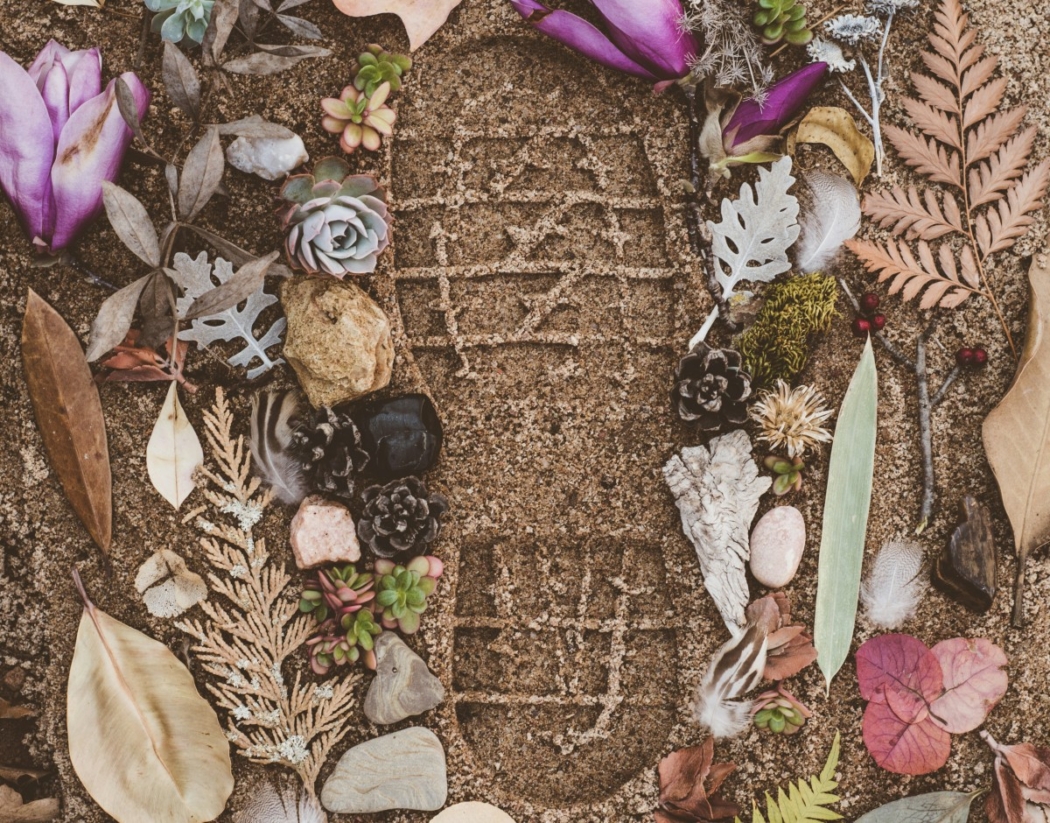
“If you beheld a garden in which all the plants were the same as to form, color and perfume, it would not seem beautiful to you at all, but, rather, monotonous and dull. The garden which is pleasing to the eye and which makes the heart glad, is the garden in which are growing side by side flowers of every hue, form and perfume, and the joyous contrast of color is what makes for charm and beauty.”1
Abdu’l-Baha described beauty as diversity; flowers of different hues, forms, and perfumes growing side by side. I wonder what our relationship with beauty would look like if we truly believed that. In a world where spiritual principles were more deeply woven into society, where human dignity was valued more than perfection and individuality more than conformity, would we still feel such pressure to alter ourselves in order to move closer to sameness? Nature itself rarely values uniformity. Forests are beautiful because of variation, gardens are beautiful because of contrast, human beings are recognizable because of our differences. Yet modern beauty standards increasingly push us toward homogenization.
I think it’s time for those of us that aren’t already to start questioning the status-quo and asking ourselves what we’re doing to our faces, and why. And if concern for ourselves isn’t enough motivation, what about the next generation? What messaging are we sending? What subconscious insecurities are we creating in them by changing our own appearance?



"*" indicates required fields
Join activities, celebrations, study groups, spiritual empowerment and education programs for young people, and more.
Horizons is an online magazine of news, stories and reflections from around individuals, communities
and Baha’i institutions around Australia
Baha’i beliefs address essential spiritual themes for humanity’s collective and individual advancement. Learn more about these and more.

We recognise their continuing connection to land, waters and community. We pay our respects to Aboriginal and Torres Strait Islander people and their cultures; and to elders both past and present.
The views expressed in our content reflect individual perspectives and do not represent authoritative views of the Baha’i Faith.


Visit the site of the
Australian Baha’i Community
and the Baha’i Faith Worldwide