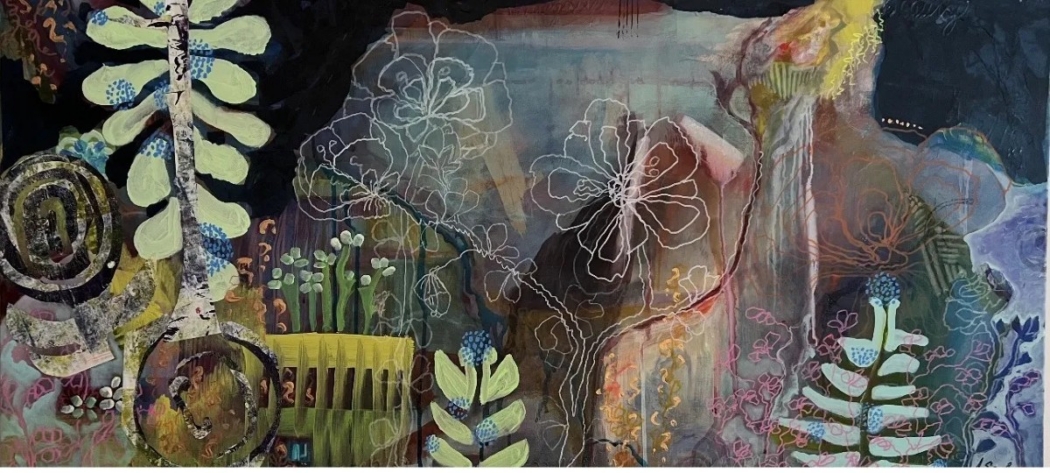


Highlighting Australia
- As a proudly Australian initiative, we’re excited to showcase a collection of Australian stories, music, tributes and more.

Join activities, celebrations, study groups, spiritual empowerment and education programs for young people, and more.
Baha’i beliefs address essential spiritual themes for humanity’s collective and individual advancement. Learn more about these and more.

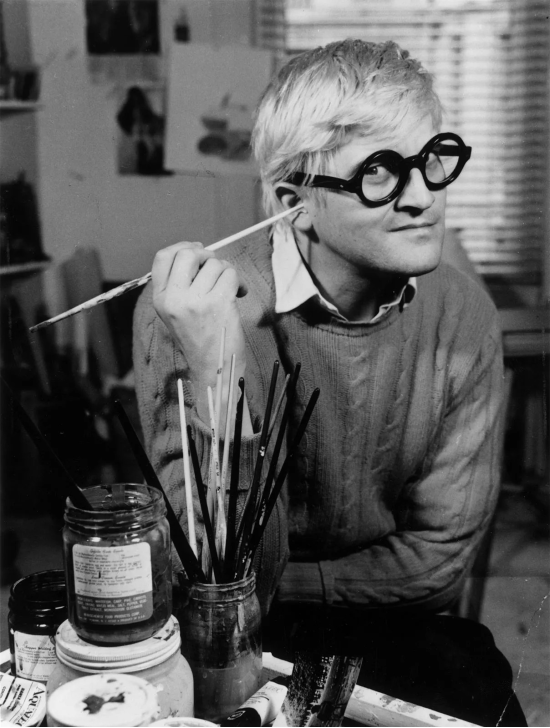
I had been an admirer of David Hockney’s art for many years and was deeply saddened by his passing. In the days that followed, I often returned to his works and found myself contemplating why it resonated with me so strongly. Gradually, I began to recognize similarities between aspects of his artistic vision and certain Baha’i principles. This article is an attempt to put those personal understandings into words and explore the connections I have witnessed between his works and Baha’i teachings.
Don’t get me wrong! Hockney’s art is not religious in its spirit; however, many of its central themes align with principles of the Baha’i Faith. His lifelong devotion to exploration, his admiration for the beauty of all living things, his use of multiple perspectives, and his strong belief in sharing experiences with others all find remarkable parallels in the Baha’i teachings.
The Independent Investigation of Truth; Learning to Observe Wholeheartedly
Few artists have expressed as enthusiastically about observation as David Hockney. Here and there, he brought forth the idea that most people do not essentially look at the world around them with close, attentive eyes. For Hockney, drawing was first and foremost about investigation and exploration, not just forms and techniques.
As he famously stated:
“Drawing makes you see things clearer, and clearer, and clearer still.”1
He also remarked:
“…I had to keep looking and drawing, and looking. Now, because of all that time I spent drawing these grasses, I know what I’m looking for.”1
These statements unveil a fundamental notion of his artistic philosophy: looking should not be passive. It demands massive patience, openness, and concentration. The artist notices the waltz of light and shadow on a wall, the gentle movement of a tree branch, and the transient colors of a landscape. What seems ordinary, through the eyes of the beholder, becomes extraordinary.
Hockney’s emphasis on seeing closely to avoid miscomprehension and false judgment recalls one of the key Baha’i principles of the independent investigation of truth. Baha’u’llah advises every individual to seek the truth for themselves rather than relying primarily on assumptions. He urges humanity to:
“Look into all things with a searching eye.”2
The more carefully we gaze upon the surroundings with fondness, the more deeply we understand. In other words, learning to see thoroughly becomes both an artistic practice and a spiritual discipline.
Beyond the Tears is Sunshine
Light has a special place in Hockney’s work. Unlike many painters influenced by the dramatic contrasts of Baroque art, Hockney rarely created scenes dominated by darkness. Light is everywhere. It floods the landscape, fills interiors, and illuminates every single corner of the composition.
This strong focus on light and joy reminds us of the spirit of Abdu’l-Baha, whose Life was characterized by constant address to happiness and hope. The educator Stanwood Cobb described joy as “the keynote of all of Abdu’l-Baha’s teaching.” He recalled that one of Abdu’l-Baha’s most frequent greetings was a simple question:
“Are you happy?”
When troubled visitors came before Him in tears, Cobb wrote that Abdu’l-Baha would smile as if to say:
“Yes, weep on. Beyond the tears is sunshine.”3
Unity in Diversity; Many Perspectives, But One Reality
Among Hockney’s most ingenious contributions to modern art was his playfulness with traditional perspective. Instead of presenting the world from a single and fixed viewpoint, he often fused multiple perspectives within the same image.
His photographic collages, known as “joiners,” are especially significant in this regard. Created from photographs taken from different angles and moments, they offer a richer, more dynamic picture of reality. Each piece keeps its uniqueness while forming an integrated whole.
I believe this approach evokes the Baha’i principle of unity in diversity.
The Baha’i teachings assert that diversity is not a barrier to unity but, in contrast, one of its greatest advantages. Abdu’l-Baha explained that differences among human beings should become a source of harmony, and we should show kindness to whosoever comes in our way.
Possessing a Pure, Kindly and Radiant Heart
The Bahá’í writings teach that true perception depends on the purity of the heart. In The Hidden Words, Baha’u’llah counsels:
“Possess a pure, kindly, and radiant heart.”4
Throughout his career, Hockney maintained the receptiveness and curiosity that many artists lose as they age. His work remained lively, energetic, and open to new bright horizons. He was anything but cynical. Whether working with acrylic paint, colored pencils, photography, or digital media, he approached each medium with a childlike passion and a willingness to experiment.
Art as a Means of Service
Hockney often spoke about the ultimate aim of art as an act of sharing. He explained:
“What an artist is trying to do for people is bring them closer to something.”5
He continued:
“You wouldn’t be an artist unless you wanted to share an experience, a thought.”5
This viewpoint is consistent with the Bahá’í vision of human relationships. Abdu’l-Baha encouraged people:
“Be thou of those who foster peace. Offer thy friendship, be worthy of trust. Be thou a balm to every sore, be thou a medicine for every ill.”6
Hockney’s art, likewise, serves as a canopy that brings observers under the same roof. Through acts of showing and sharing, he helped others rediscover the meaning of life and motivated them to connect through common elements of human experience.
And finally, Hockney’s art encourages viewers to become more mindful of the beauty that surrounds them and to perceive the world with greater appreciation, intimacy, and gratitude, as if everything and everyone they encounter carries its own inner light.


"*" indicates required fields

Join activities, celebrations, study groups, spiritual empowerment and education programs for young people, and more.

Horizons is an online magazine of news, stories and reflections from around individuals, communities
and Baha’i institutions around Australia
Baha’i beliefs address essential spiritual themes for humanity’s collective and individual advancement. Learn more about these and more.

We recognise their continuing connection to land, waters and community. We pay our respects to Aboriginal and Torres Strait Islander people and their cultures; and to elders both past and present.
The views expressed in our content reflect individual perspectives and do not represent authoritative views of the Baha’i Faith.


Visit the site of the
Australian Baha’i Community
and the Baha’i Faith Worldwide